
Our Vision and Mission
Vision: The Coming to the Table vision for the United States is of a just and truthful society that acknowledges and seeks to heal from the racial wounds of the past—from slavery and the many forms of racism it spawned.
Mission: Coming to the Table provides leadership, resources, and a supportive environment for all who wish to acknowledge and heal wounds from racism that is rooted in the United States’ history of slavery.
The CTTT Approach
The CTTT approach to achieving this vision and mission is grounded in theories and practices of Strategies for Trauma Awareness & Resilience (STAR), with a particular focus on Transforming Historical Harms and their trans-generational transmission, working toward racial justice and equity through a Restorative lens, and utilizing Circle Process and Touchstones to create space in which participants feel safe enough, and motivated, to do the work. Then, the CTTT Approach involves four interrelated practices:
- Uncovering History: researching, acknowledging, and sharing personal, family, community, state, and national histories of race with openness and honesty
- Making Connections: connecting to others within and across racial lines in order to develop and deepen relationships
- Working Toward Healing: exploring how we can heal together through dialogue, reunion, ritual, meditation, prayer, ceremony, the arts, apology and other methods
- Taking Action: actively seeking to dismantle systems of racial inequality, injustice, and oppression; to work for the transformation of our nation.
Our Values
- Inclusion. We welcome all who wish to join the Coming to the Table conversation and who join us in honoring and committing to these principles.
- Respect and Tolerance. We respect the integrity and value of all people as they seek to understand and respond to their experience of the world and the history and impact of slavery, even if we might disagree with them. To this end, we listen respectfully to each other, practice non-judgmental listening, and refrain from personal attack.
- Honesty, Truthfulness and Transparency. We strive to uncover truth and to speak it with openness and transparency.
- Justice. We accept that there has been significant harm as a result of the legacies and aftermaths of slavery. We strive to identify those harms and to take responsibility for making things right.
- Compassion, Mercy, and Forgiveness. Through compassion and love we strive to show mercy and to forgive ourselves, those who may have done us harm and those who have harmed others.
- Love. Dr. Martin Luther King, Jr. called his followers to love even those who would do them harm. This love transformed both victim and offender and created a powerful foundation for doing justice and building a beloved community. We strive to do likewise.
- Peace and Nonviolence. We seek to transform conflict through non-violent, non-coercive means so as to achieve a peaceful community.
- Healing, Transformation and Liberation. CTTT strives for racial healing, transformation and liberation through the application of the CTTT Approach.
History of Coming to the Table
“Will Hairston is a white man who descends from one of the largest enslaving empires in the Old South. The story of his family’s complex web of relationships over many generations, from slave owners through the recent past, is told in Henry Wiencek’s book The Hairstons: An American Family in Black and White.
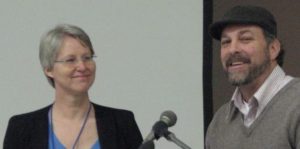 ‘When he was eighteen years old, Will attended the annual family reunion of the ‘Hairston Clan,’ an eight-hundred-person-strong gathering of an African American family with roots in the South and a direct connection to Will. The Hairstons have been convening family reunions since 1931. In 1980, they invited Waller Staples Hairston, Will’s father, to join them as their guest speaker at the Hyatt Regency Hotel in Washington, DC. Will accompanied his father.
“Waller Hairston descended from a dynasty that, at its height, controlled nine plantations—encompassing upwards of forty farms—stretching from the tidewaters of Virginia to the backwoods of Mississippi. Many thousands of African American people worked their lands as slaves, making them one of the richest families in the antebellum South. It was only recently that black and white Hairstons would have gathered for such an affair. It is a story that few from the family’s storied past would have ever believed possible.
“Seventy-nine-year-old Jester Hairston, the noted composer, songwriter, and actor, was there. He led the singing of his song, Amen, made famous in the 1963 film Lilies of the Field.
“Will was transformed. The experience of the reunion, of being with the descendants of the people his ancestors had once enslaved, of being welcomed and accepted there, changed his life. He witnessed the power of song, of coming together, and of connection with a family much larger than he had ever known. 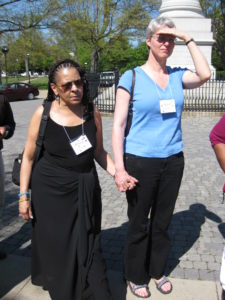
“Susan Hutchison is the six-times-great-granddaughter of President Thomas Jefferson and his wife, Martha. In 2003, after exploring her family history—and its deep connection to slavery—she attended an unlikely family reunion as well. Hers was with the descendants of Jefferson and Sally Hemings, the woman he enslaved on his Monticello plantation and who bore several of his children. At the reunion, Susan met Henry Wiencek. Having experienced the power of reunion, she told him she wanted to meet other white descendants of families who had enslaved people.
“Henry introduced Susan to Will. Together, they came up with the idea of a family reunion that was vastly different from what most people are accustomed to. It would not be a meeting of just one family. It would be a reunion that involved multiple families from both sides of the racial construct; a reunion of black and white—the descendants of people who were slaveholders with the descendants of those whom they had enslaved.
“Their idea was based on one key acknowledgment: Be they black, white or mixed, families are families. America’s legacy of slavery ripped apart untold numbers of family bonds. Not only were African American families broken; white families were estranged as well. From the time slavery was instituted in the United States black and white generations had lived and died together. They often had children together. But there was profound alienation on both sides of the racial divide. Far too many white Americans were in denial, believing that the wounds of the past had been healed by the civil rights movement of the 1960s.” 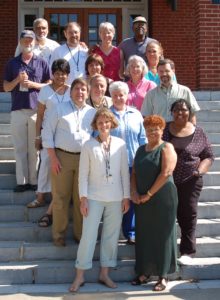
“Susan and Will saw building relationships with the ‘other side’ as a path toward a future where the deep wounds engendered by slavery could be confronted and potentially reconciled. They were inspired by Dr. Martin Luther King Jr.’s words, spoken from the steps of the Lincoln Memorial on August 28, 1963: ‘I have a dream that one day on the red hills of Georgia the sons of former slaves and the sons of former slave owners will be able to sit down together at the table of brotherhood.’
“Fired with resolve, Will and Susan invited their cousins to share another observation made by Dr. King: ‘We are caught in an inescapable network of mutuality, tied in a single garment of destiny.’ Under their leadership, black and white Jeffersons and Hairstons began planning a revolution. A group now known as Coming to the Table was born.
“An experience was planned in which black and white descendants of ancestors linked by a slave/slave-owner relationship, a blood connection, or both could explore the history of slavery—its legacy and impact on their lives. They had a longer-term goal to create a model of healing to guide individuals and groups that continue to struggle with racism in the United States and throughout the world.
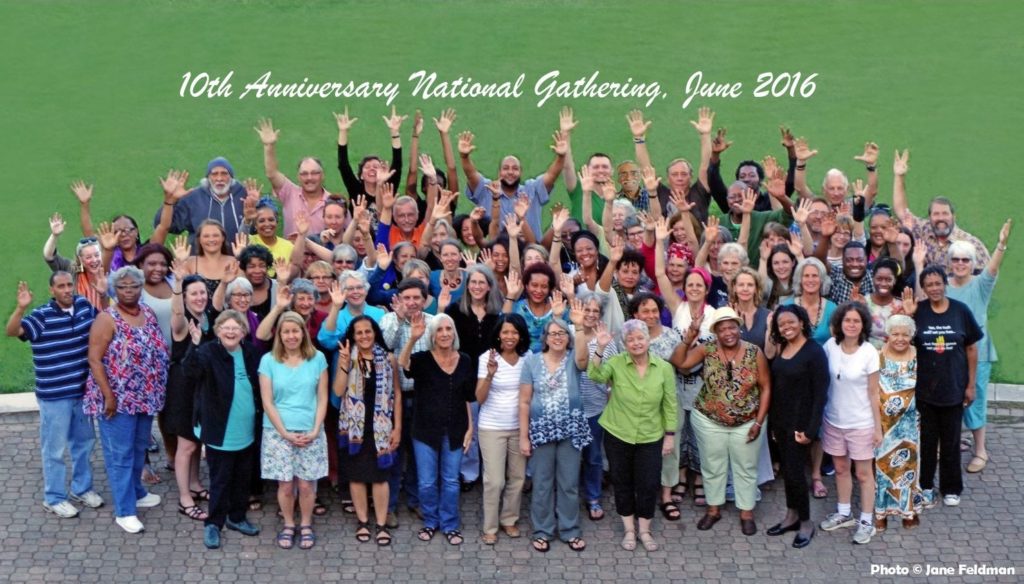 “Forty-two years after Dr. King shared his dream, two dozen descendants from both sides of the system of enslavement gathered at the table. That first small retreat took place in January 2006 at Eastern Mennonite University in Harrisonburg, Virginia, where Will worked. Through sharing stories and building relationships, the participants embraced King’s dream: They began to envision a more connected and truthful society that would be eager to address the unresolved and persistent effects of the institution of slavery.”1
Amy Potter Czajkowski, who worked for The Center for Justice & Peacebuilding at EMU, was the Founding Director of CTTT and led the program formation in partnership with the CTTT community. Amy worked extensively within CJP and EMU to secure the original organizational home for CTTT, led collaborative planning and research efforts, created conceptual frameworks, and obtained grant funding. Amy and David Anderson Hooker, consulting with other experts and CTTT members, developed the Coming to the Table Approach. They led trainings in Transforming Historical Harms (THH). You can download a free copy of the THH Guide HERE.
In 2019, Coming to the Table transitioned to become a Program of RJOY (Restorative Justice for Oakland Youth). RJOY works from an anti-racist, anti-bias lens to promote institutional shifts toward restorative approaches. RJOY provides education, training, and technical assistance and collaboratively launch demonstration programs with their school, community, juvenile justice, and research partners.
1 – Excerpt from Gather at the Table (Beacon Press, 2012), by Sharon Leslie Morgan and Thomas Norman DeWolf. Thanks to Jane Feldman for group photo from 2016 National Gathering.
CTTT Today
- supports 50+ Local Affiliate Groups that meet regularly in communities in 18 different states.
- hosts monthly guided meditation community conference calls
- plans and hosts bi-annual National Gatherings (hoping/planning to shift to annual gatherings at some point in the near future)
- works with faith-based and other groups to address racism
- supports people with family history and genealogical research
The Future of CTTT
Many future activities are planned for CTTT, including:
- National Gatherings have been held in 2012, 2014, 2016, 2018. The 2020 NG was postponed until 2021 due to the pandemic and was virtual. The next National Gathering will be held in Oakland, California in June 2023. Our goal for the future is to schedule National Gatherings in hybrid-mode (in-person as well as virtual). More to come!
- CTTT Training Workshops have been held multiple times in multiple locations and virtually, every years since 2016 up through 2023. More to come!
- A documentary film and online webinar showing how the CTTT Approach can be put into action is being planned for the future.
- Organizing events, blog posts, editorials, etc., around important dates in history (like the anniversary of Martin Luther King, Jr.’s birthday and “I have a dream” speech, Juneteenth, Emancipation Proclamation, and others)
- Partnerships to take positive action with like-minded organizations
Want to be involved? Go to our Contact Us page and send a message to let us know.
Meet Our Program Manager
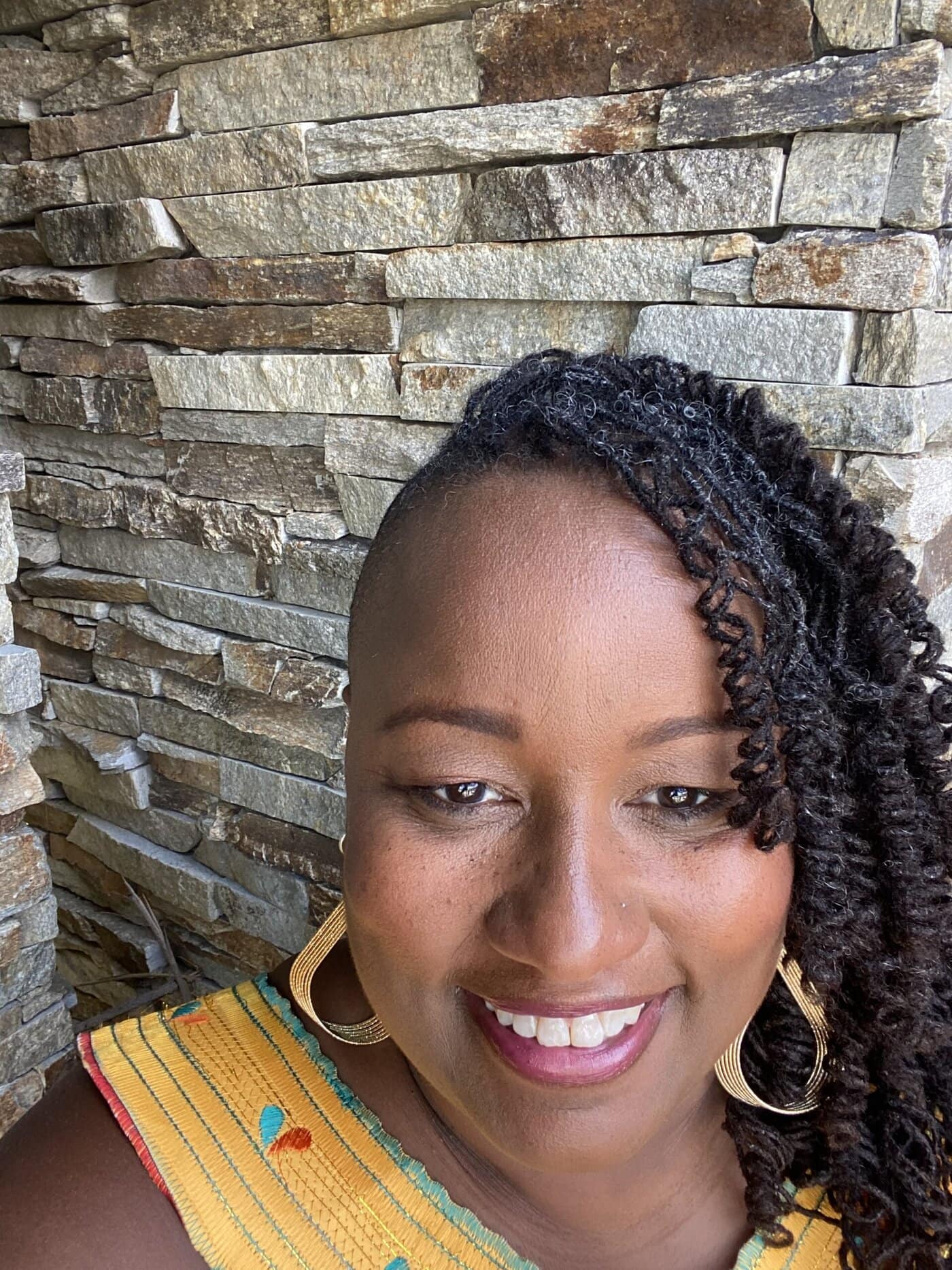
Dr Giavanni Washington
Called to the work of ancestral restoration and racial healing, Dr. Giavanni Washington creates transformative opportunities to reconnect with lost histories and ignite ancestral wisdom. As the new Program Manager for Coming to the Table (CTTT), Giavanni brings over two decades of experience in community facilitation, restorative practices, and equity-centered leadership.
Dedicated to amplifying Black beauty, honoring the deep roots of Black divinity, and fostering spaces for truth-telling and reconciliation, Dr. Washington’s work bridges personal and collective healing. She is the creator of the Black Goddess Within Oracle Deck, a tool for spiritual guidance rooted in ancestral wisdom. Affectionately known as Dr. G, she is an intuitive healer, mother, speaker, and cultural bearer, holding a doctorate from UCLA’s Department of World Arts and Cultures. She was recently selected as a California Creative Corps Artist and Culture Bearer Fellow by the California Arts Council.